
ABOUT THE ARTIST
Biography
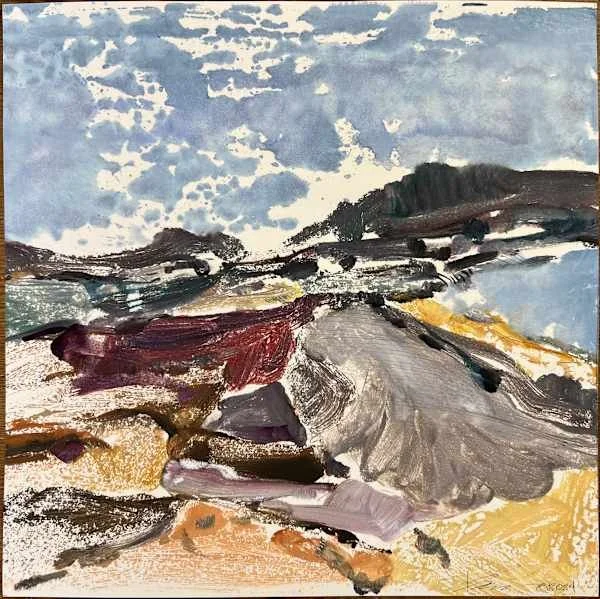
Bonnie Cook is a Pacific Northwest painter known for her atmospheric landscapes, expressive mark making and the quiet emotional tone that runs through her mixed-media work. Drawing inspiration from the natural world, Cook creates paintings that balance abstraction with subtle references to land, sky and shifting weather. Her surfaces often contain layered color, soft transitions and textured passages that invite close looking.
Cook has exhibited throughout the region, and her work is held in private and corporate collections. With a background rooted in both fine art and design, she brings sensitivity to composition, balance and tonal harmony. Her paintings reflect a contemplative approach to landscape and memory, capturing moments of stillness, movement and quiet observation.
ARTIST STATEMENT
Bonnie was fortunate to have access to painting supplies at a young age, and she received steady encouragement throughout her school years to continue making art. Influenced deeply by the natural world, her work reflects her frequent visits to the landscapes that surround her. She often goes out with her sketchbook, capturing fresh impressions en plein air to guide her paintings.
“My influences have mostly come from the natural world. I have not taken too many detours from that; the paint is the most important part.” Her paintings carry the immediacy of the moment, revealed through her assured brushwork.
For Bonnie, the work has always been about the paint itself: about color and the full range of possibilities within it, including the mixing before the act of painting begins.
“I like watching what happens to the light when the sun comes out at that low angle in the sky for a few hours in the winter. I like seeing Ebey’s Landing when the black strips of earth after harvest meet the dead yellow of winter fields. The black next to the yellow can look almost purple. And I like the bright yellow green stripes when seedlings emerge at the end of winter. There are so many greens on the prairie. Black green beet colors, blue green cabbage colors, yellow green alfalfa colors.”
She also watches the wind, observing how it moves through leaves and creates shifting greens. “Although there are many more colors in these paintings, what it really comes down to is my ongoing relationship with red and green and how these colors and other elements organize themselves into a little theatre on the canvas.”