

ABOUT THE ARTIST
STATEMENT
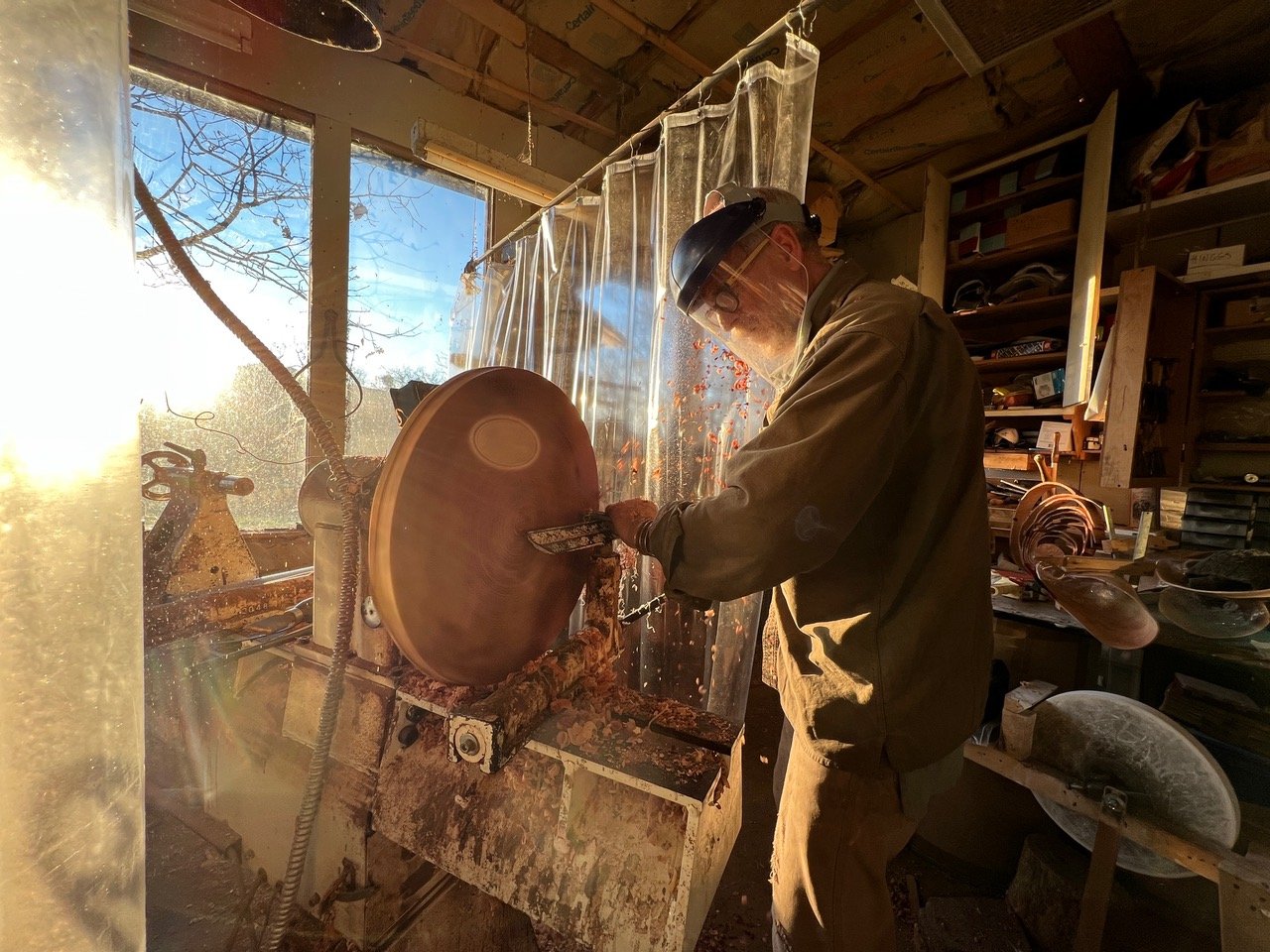
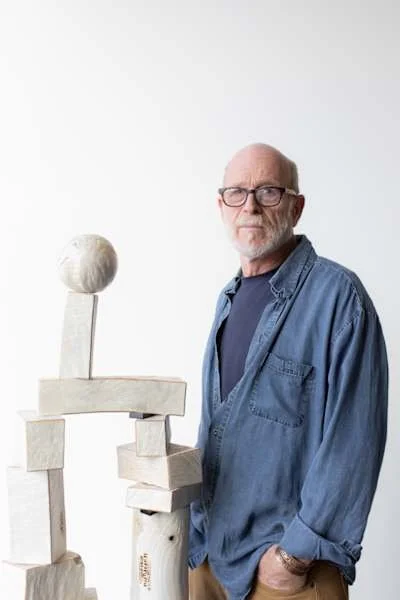
My conceptual framework is closely connected to my chosen medium, wood, specifically Pacific Madrone (Arbutus menziesii). You could call me a strongly material-based wood sculptor. I was first trained as a furniture maker and timber framer, two professions where stability and precise control over the medium are crucial. I am good at that work and have enjoyed mastering those skills.
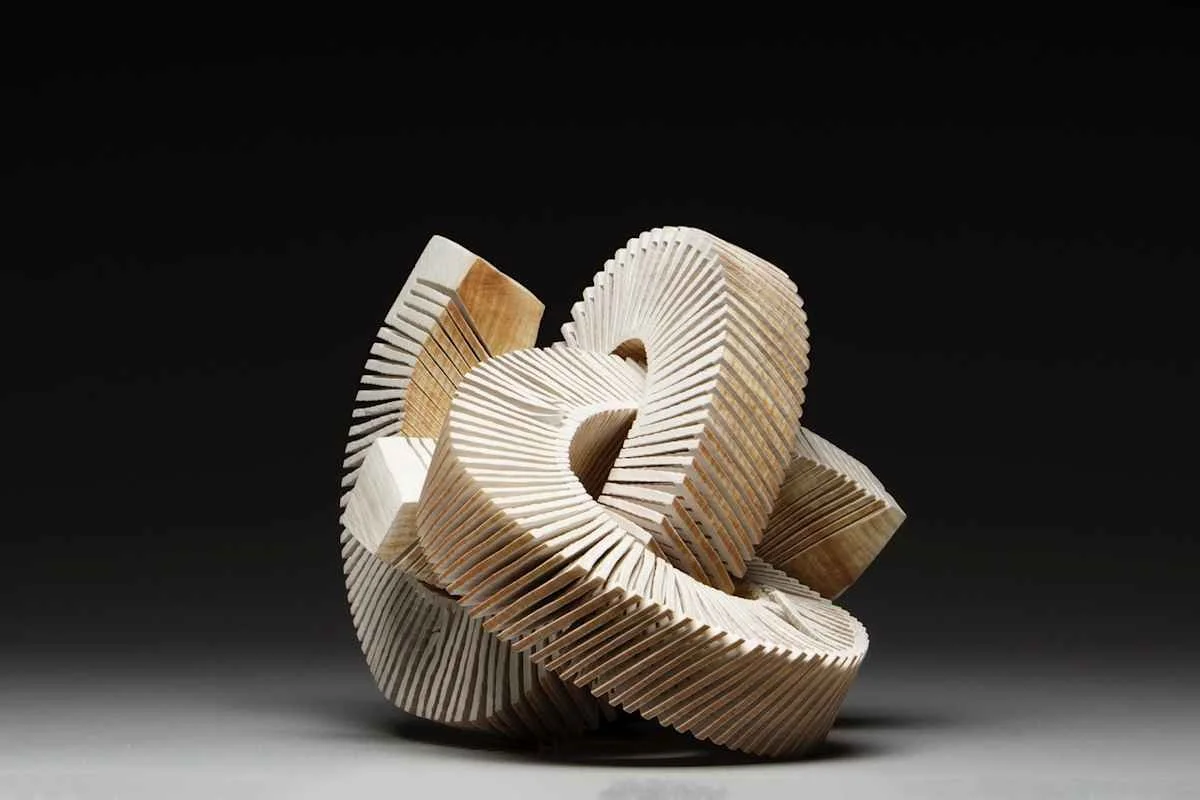
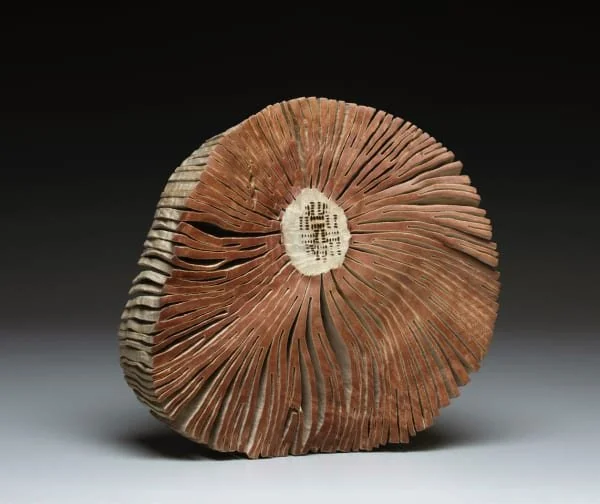
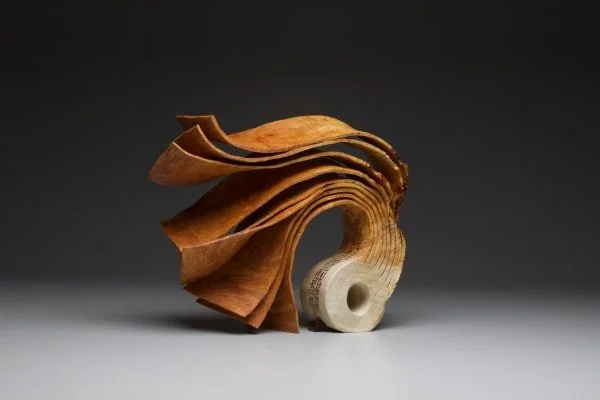
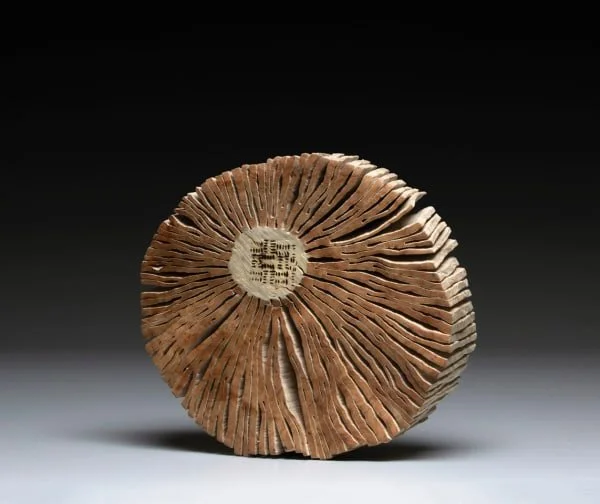
But control and predetermined outcomes do not feed my curiosity. For me, the question becomes: why make something if I already know what it will look like when it is done? Instead, I create simple forms in green, unseasoned madrone. As the moisture evaporates, the forms go through subtle and not-so-subtle changes. Some of these are predictable, but many are not.
Over the years I have studied this particular wood species, which is indigenous to the Pacific Northwest. Madrone has a unique cell structure. I use wood from the entire tree—roots, burls, trunk and branches. Each part of the tree once performed a different function, and therefore has a different grain structure and movement. By slicing or turning the wood very thin, the resulting forms become depictions of the inner life of the tree, whether in round or flat form. The thinner I work the wood, the more it can move and change, but it also becomes more fragile.
As a maker, a struggle emerged over time. I wanted to pursue my “art” ideas, but that sometimes meant too much interference, too much of myself imposed onto the material. I had to learn to listen, to watch and to be quiet, allowing the material to have its say.
Someone once called the process “predictable unpredictability.” It fits. The objects that emerge are ones I could never have created through vision and skill alone. When I get it right, beautiful pieces appear. But for these, I can only take part of the credit.
My evolution has been about finding balance—relinquishing control when needed, and stepping back in when appropriate. Simplicity is not always easy for me to find, and there is always the temptation to show skill. But I thrive on this process and feel enriched by it. Working so closely with my material is a rare and rewarding experience.
Wood is one of humanity’s earliest materials. It carries a long history of use. It was once a living thing, again with its own history. As a material it can be controlled and tamed, used for both strength and beauty. I respect that history, but I aim in a different direction.
MORE FROM THE ARTIST